| REMOTE PROJECT ENGINEER | SERVICE STANDARD |
CLOSEOUT DOCUMENTATION & CONTROL
Track Early. Compile Cleanly. Turn Over Completely.
A defined process for identifying, tracking, collecting, organizing and turning over the documents required to close the project.
| SERVICE | COMMERCIAL POSITION | BEST FIT |
| Closeout Documentation & Control | Included within Project Engineering Support | Projects with warranties, O&Ms, training, certifications, spare parts and turnover requirements that must be tracked across multiple trades |
1. What This Service Does
Closeout should not start when the project is almost over. By then, vendors are harder to reach, warranty dates are unclear, O&M manuals are missing and retainage can be tied up by paperwork that should have been tracked months earlier.
Remote Project Engineer starts by extracting the project closeout requirements, building a Master Closeout Matrix and tracking each required item through collection, review, correction and final turnover. The goal is a clean, indexed and traceable closeout record instead of a last-minute document chase.
2. Why It Matters
Incomplete closeout documentation can delay final acceptance, final payment and retainage release. RPE keeps the administrative side visible so warranties, O&Ms, training records, certifications, testing records and other required turnover items are identified early and tracked to completion.
3. What Is Included
- Extract closeout requirements from Division 01 and applicable technical specifications.
- Build and maintain the Master Closeout Matrix by subcontractor, vendor, requirement and status.
- Track O&M manuals, warranties, certifications, training records, spare parts, attic stock, test reports and other required turnover items.
- Chase subcontractors and vendors for missing closeout documents when authorized.
- Review incoming closeout documents for administrative completeness and correct project identification.
- Verify warranty forms, start dates and required signatures against available project information.
- Organize multi-volume PDF packages with bookmarks, indexes and consistent naming.
- Maintain deficiency / missing-item tracking through final turnover.
- Archive the final approved closeout record in the agreed project system.
4. How the Process Works
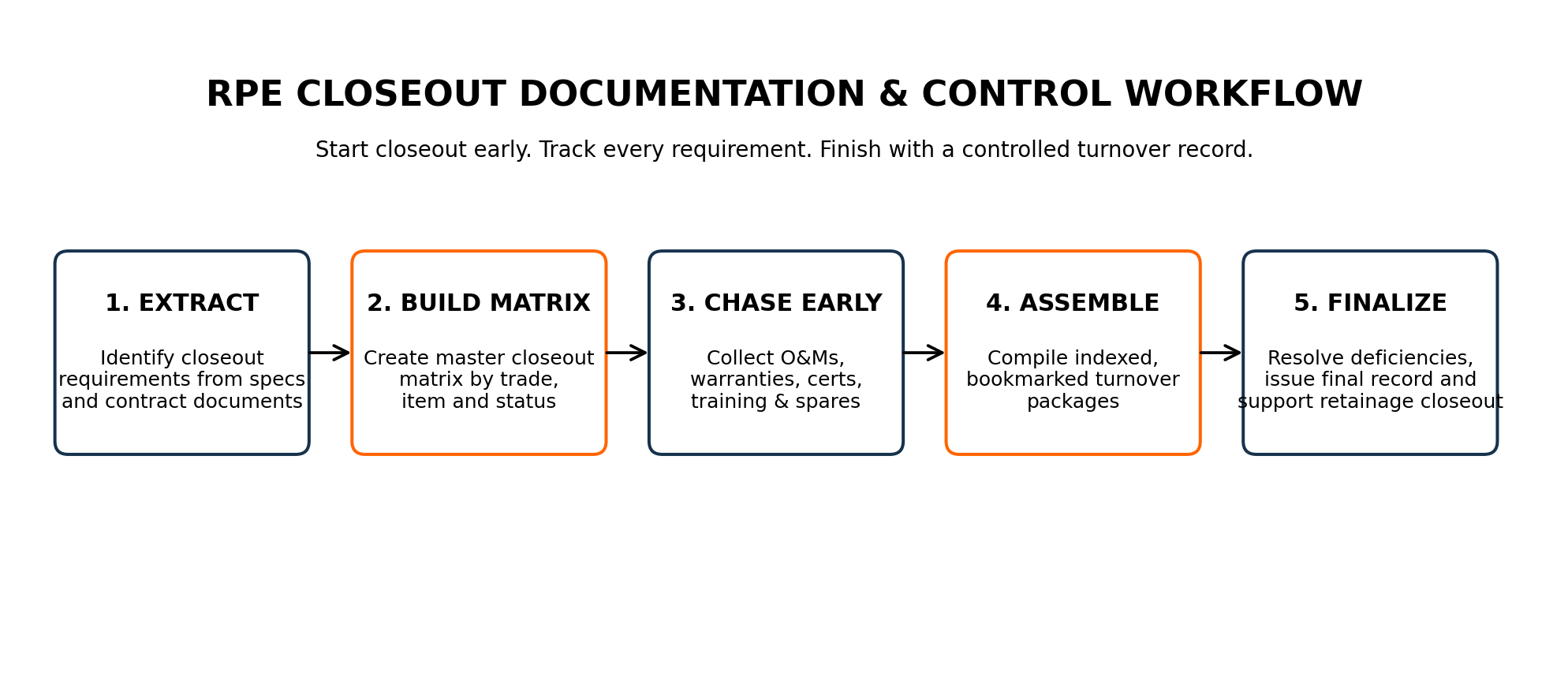
The standard workflow is: Requirement Extraction → Master Matrix → Early Collection → Package Assembly → Final Turnover.
5. Typical Closeout Items
- Operations & Maintenance manuals.
- Manufacturer and subcontractor warranties.
- Training records and sign-in documentation.
- Testing and balancing reports.
- Startup, commissioning and certification records.
- Spare parts, special tools and attic stock documentation.
- Material / equipment certifications and final data sheets.
- As-built / record documentation supplied by responsible parties.
- Final approved submittals and equipment data required for turnover.
- Other project-specific closeout requirements identified in the contract documents.
6. Responsibilities and Handoffs
RPE controls the administrative closeout record. The contractor remains responsible for field completion, punchlist execution, physical verification, required inspections and acceptance of completed work.
7. Start Closeout Before the End
RPE begins closeout tracking early whenever practical. As equipment and material submittals are approved, the related O&M manuals, warranty forms and turnover requirements can be identified and added to the matrix. This reduces the end-of-job scramble and gives the PM visibility into what is still missing.
8. What You Receive
- A Master Closeout Matrix showing required items, responsible party and current status.
- A visible deficiency / missing-item list throughout the closeout process.
- Organized, indexed and bookmarked turnover packages.
- A traceable record of received, revised and outstanding closeout documents.
- A final controlled closeout package ready for contractor / design-team review.
- A cleaner path toward final acceptance, final billing and retainage release.
9. What We Need From Your Team
- Current contract documents and applicable closeout specification requirements.
- Authorized subcontractor and vendor contacts.
- Timely notice of equipment, vendor or scope changes affecting closeout requirements.
- Project dates and completion milestones needed to verify warranty / turnover information.
- Prompt PM direction when missing documents require escalation or contractual action.
10. Service Boundaries
- RPE does not perform physical jobsite inspections or certify that installed work is complete.
- RPE does not create as-built information that must be generated or verified by the responsible field party.
- RPE does not approve technical content on behalf of the Architect, Engineer, Owner or commissioning authority.
- RPE does not perform training, testing, balancing, startup or commissioning activities.
- RPE does not determine substantial completion, final completion or retainage release authority.
11. Commercial Summary
| Service | Closeout Documentation & Control |
| Included Under | Project Engineering Support |
| Project Engineering Support Price | $1,000 / week |
| Initial Commitment | 12 weeks — $12,000 to start |
12. The RPE Service Promise
No last-minute document scramble. No mystery closeout list. No lost turnover record. This standard is published so the contractor understands how RPE controls closeout documentation while the contractor and design team retain field completion and acceptance authority.
| CLOSEOUT CONTROL — INCLUDED WITH PROJECT ENGINEERING SUPPORT $1,000 / WEEK • 12-WEEK MINIMUM • support@remoteprojectengineer.com |